
Caregivers cannot stay by their patient’s side 24/7. This is due to their other responsibilities, which include food preparation, basic cleaning, and ensuring that the environment is hygienic and safe. It shouldn’t be an issue in certain circumstances if the caregiver leaves the room for a brief length of time.
But if the person is living with dementia or Alzheimer’s disease and if they require assistance to get out of bed, it becomes a challenging situation for both.
It can be problematic if the caregiver isn’t there or isn’t informed that the patient is attempting to leave their bed. More precisely, the patient has the potential to fall and suffer catastrophic injuries as a result of the fall, as well as exit the room without monitoring.
Therefore, gadgets like bed alarms and motion sensor detectors may save caregivers a lot of time and effort since they eliminate the need to suffer through restless nights, wait by your patient’s bed all day, or wait outside the bedroom. However, it also entails allowing you to complete other necessary duties, get some rest, or spend quality time alone while the person is sleeping.
When someone attempts to get out of bed, these gadgets employ motion or pressure sensors to detect it and sound an alarm, notifying the caregiver around to ensure their safety.
Consider them as a call bell button that the person does not need to press. While pull-string devices are a useful tool, they may not be suitable for persons with dementia or Alzheimer’s disease due to memory difficulties.
Seniors living with dementia or Alzheimer’s disease are more likely to wander, so a bed alarm is one way to keep them secure. Of course, these may also be used as a chair alarm. As a result, it’s a product that may be utilized in various locations.
A bed alarm pad, especially one with a wireless system, can be a useful tool for caregivers. The family member no longer has to stay in the bedroom waiting for their senior to fall asleep because these gadgets can send out an alarm.
Installing a bed alarm for people living with dementia or Alzheimer’s disease has hardly any disadvantages. However, they can occasionally provide false alarms, which can be inconvenient.
You may try a few different beds and chair exit alarms to evaluate which one is ideal for you and your family. They are a cost-effective solution to the issues that may arise if you do not use one.
Best Bed Alarms For People Living With Dementia
Bed alarms all have the same goal in mind: to prevent potentially deadly accidents. Alarms, however, are not all designed equal. Whether you’re looking for the best bed alarms for seniors at risk of falling or people living with dementia, the following bed alarm recommendations will be helpful. In addition, we explore how bed alarms can benefit caregivers and those living with dementia.
1. Secure Wireless Patient Monitor Bed Set
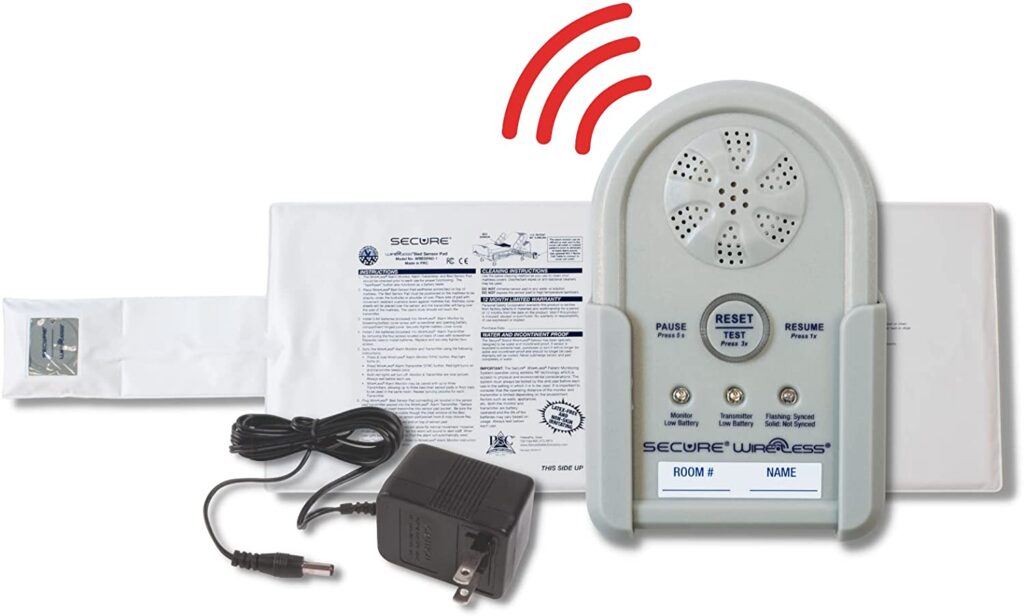
With the Secure Wireless Patient Monitor Bed Set, we’re off to a strong start with the recommendations. The package includes a transmitter, a bed sensor pad, and an alarm monitor. As the name implies, all of these components are wireless, and you can use a single transmitter to connect up to three Secure sensor pads.
The set eliminates tripping dangers and includes unique bi-directional wireless communication at 2.4 GHz. So when a bed alarm is employed at a facility, this implies there should be minimal to no interruption.
It is entirely up to you where you want to install the alarm. You can keep things quiet within the patient’s room because it will still operate up to 150 feet away from the transmitter. It’s also worth mentioning that the alarm would automatically reset when the patient returns to the bed. If required, you may also manually reset it.
Can you rely on the wireless connection between the devices? The alarm sensor and transmitter, on the other hand, will sync every 5 minutes. And if the connection is disrupted, the monitor will alert you that something is wrong. For any alarm, I make sure the person living with dementia can’t hear it go off, so placing the monitor where only the caregiver can hear the alert is the best option.
2. Smart Caregiver Cordless Alarm and Bed Pad
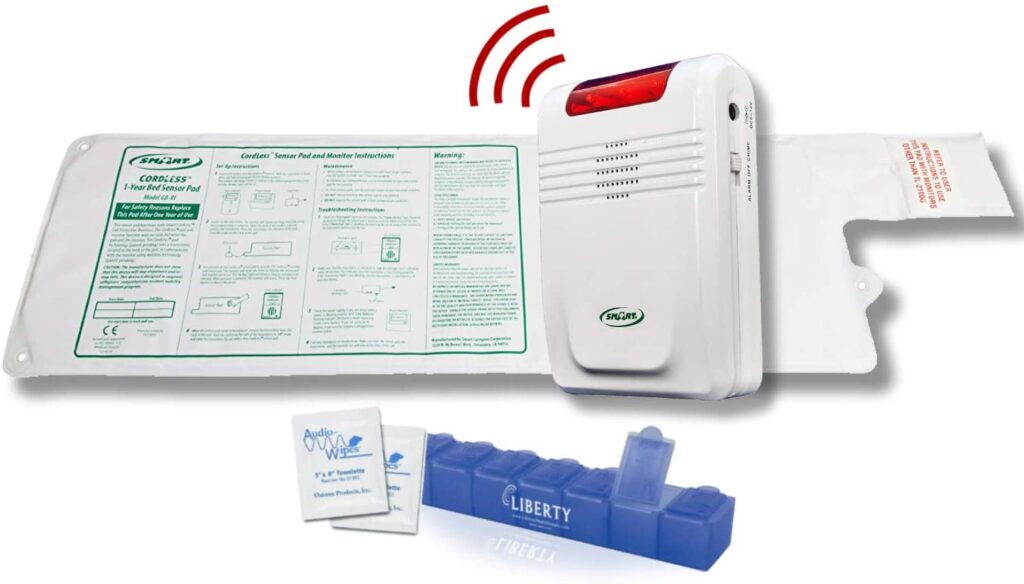
What distinguishes this senior bed alarm from others? To begin with, it contains all of the essential features that an alarm clock should have. It can be plugged in without any long wires, which is beneficial if you would like to avoid tripping risks. The alarm sound may also be adjusted via the monitor. It also reacts swiftly when a senior or a person living with dementia attempts to get out of bed.
The monitor’s range is one of the reasons why this alarm clock set stands out. The caregiver may effortlessly get other tasks completed while on continual alert with a range of up to 300 feet.
Simultaneously, the caregiver can keep the person from being disturbed by the alarm. There is, however, a second advantage you should know. A single monitor may be used to connect up to six devices from the 433 Cordless Sensor range. Then, simply remove the bed alarm set from the container and use it as needed when it comes. The bed sensor pad is simple to use, but it’s also long-lasting and low maintenance.
3. Wireless Caregiver Pager Motion Sensor Alarm
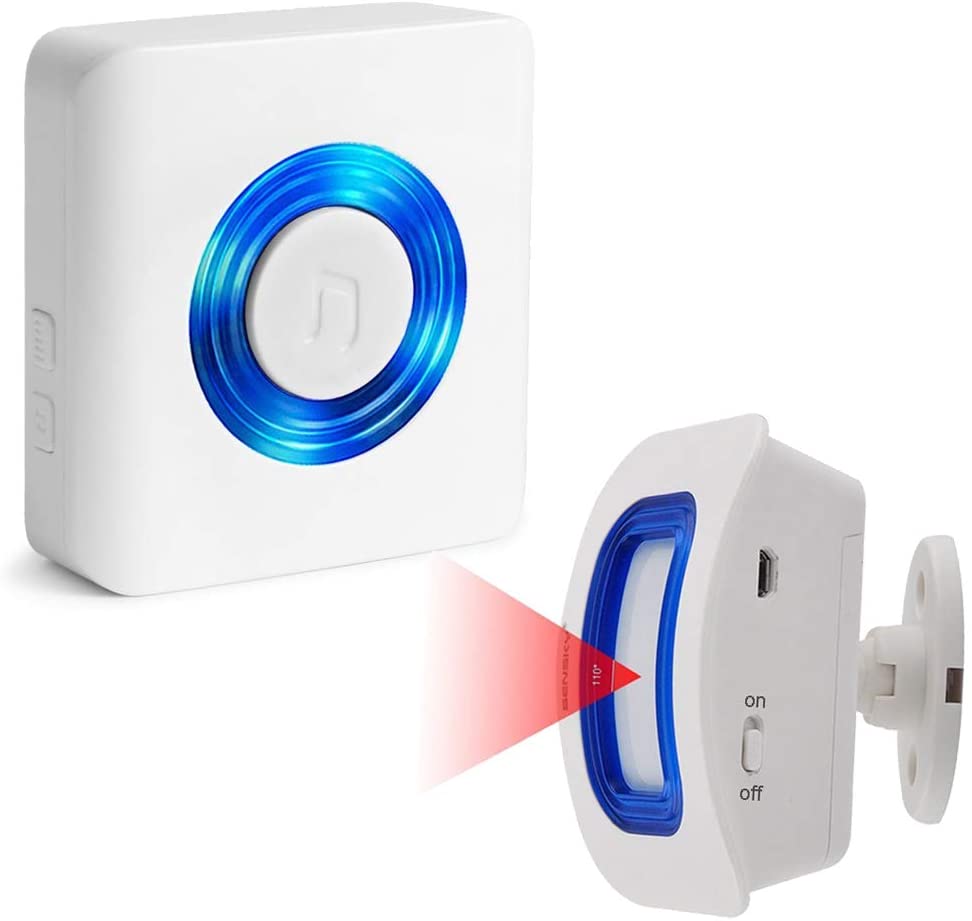
Wireless Caregiver Pager Motion Sensor Alert will provide you and your family peace of mind. It will notify you when your loved one with dementia immediately when they requires assistance. The sensor is attached to the person’s nightstand. The sensor will immediately warn the carer if the person moves.
It can be set up easily. The EverNary Wireless Monitor Sensor is powered by a battery (but may alternatively be powered by a USB cable). Around 20 transmitters can be linked with each receiver. Up to 20 Receivers can be connected with each transmitter. It can transmit signals to the receiver within 150 m in an open area. So, you can keep an eye on your loved one remotely.
The LED Light alert illuminates to provide a visual alert whenever the sensor is activated. It’s an excellent visual indicator when playing music or for the hearing impaired. You may customize your receivers by featuring 58 distinct melodies and 5 volume levels up to 110dB.
4. Bed Sensor Alarm

As a caregiver, you have a lot on your hands. This bed alarm saves you more time for household chores by enabling you to monitor your loved one remotely from anywhere in the home.
The motion sensor may be installed on the wall, beside entrances, or on the floor, or it can be put on a flat surface with a built-in stand. When the motion sensor field is breached, the signal is sent to receivers within a 918-foot radius in an open environment.
Around 32 transmitters can be linked with each receiver. Likewise, up to 32 Receivers can be connected with each transmitter.
The pager can be battery-operated and kept in the caregiver’s pocket or at his side. There will be no sound with the LED light reminder mode, and the LED light will blink once the receiver gets the signal.
5. Call2U Caregiver Wireless Pager (Could be a Good Option if They Can Still Remember to and will Press a Button for Assistance)
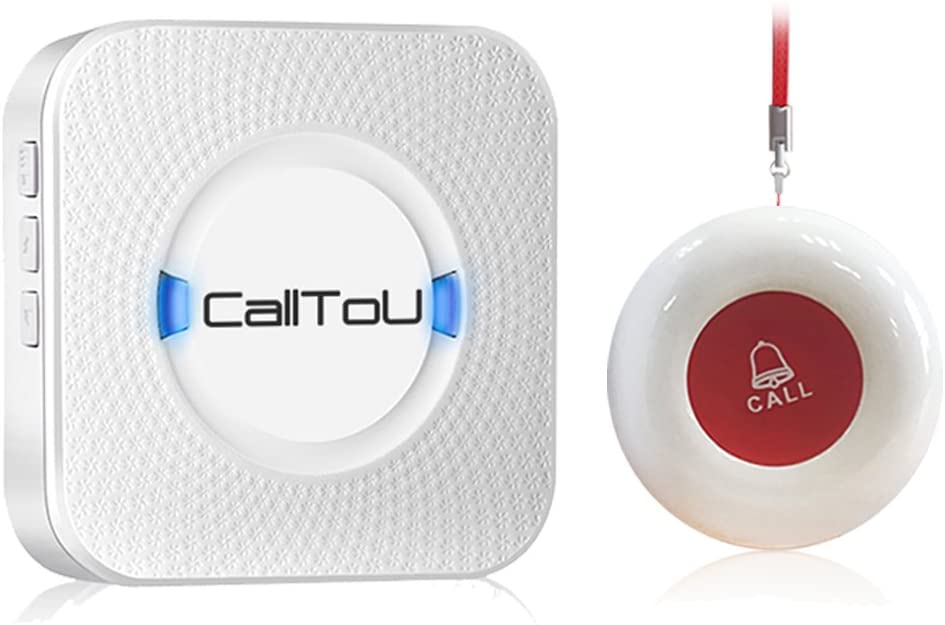
This CallToU system includes two pagers and three receivers, making it perfect for bigger families or those with several caretakers. The volume of the receivers may be adjusted between 0 and 110 decibels, and users can pick from 55 distinct ringtones.
That last option is particularly useful—if a ringtone becomes too irritating, you can always replace it with something more bearable. The operating range is about 500 ft in an open area.
This waterproof pager comes with neck straps and double-sided stickers. The pairing procedure is straightforward, and the system may be expanded as needed with more pagers and receivers. Basically, this is a cost-effective, versatile pager system.
6. Smart Caregiver Motion Sensor & Pager
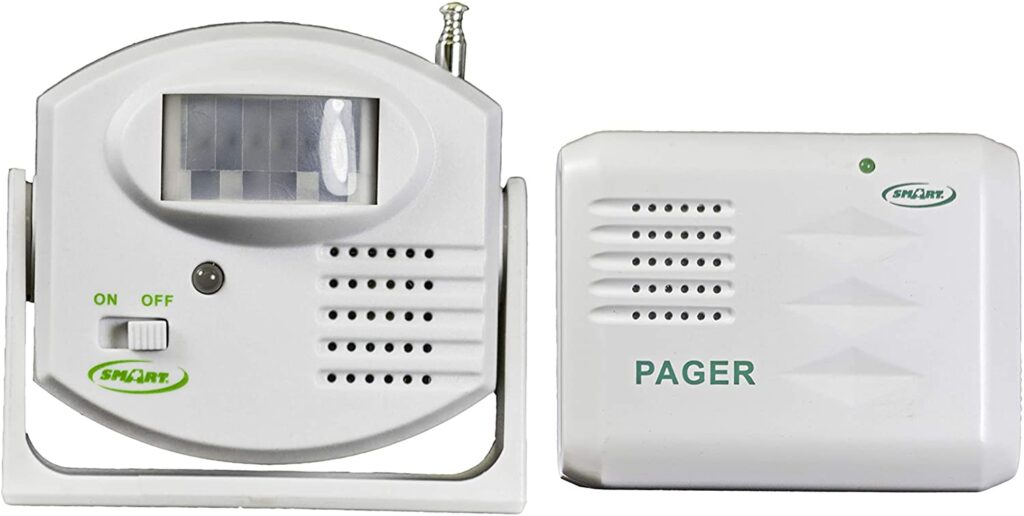
This two-piece system decreases noise in homes and institutions by reducing in-room alarm sounds. When the infrared sensor field is disrupted, this little pager has a sensing region that reports movement. The motion sensor transmits a signal to a pager worn by the caregiver rather than sounding an alarm close to the individual.
It enables the caregiver to be alerted regardless of where they are without causing any inconvenience to others. For example, when your loved one crosses the motion sensor’s range when they get up to walk around or depart the room, it will signal you. The pager, which could be donned by the caregiver or put on a desk or bedside table, receives a quiet signal up to 300 ft away.
Benefits Of Installing a Bed Alarm & Motion Dectector Alarms

To be honest, even the ultimate bed alarms & motion detector alarm for the elderly or people living with dementia will not be able to prevent them from falling out of bed. Instead, they warn caregivers that a person is starting to move around and may require assistance. When using the ideal bed alarms and motion detector alarms, both caregivers and care recipients can benefit in the following ways:
1. Prevention of Falls and Injuries
If you’re caring for a senior or a person living with dementia, a fall may be among the terrifying things that may happen. The risk of falling grows considerably as people grow older or as their dementia progresses. When someone requires your support, a bed alarm can notify you, so you will be able to reach on time.
2. Decrease Episodes of Wandering
People living with dementia exhibit this “wandering” habit. They might strive to get out of the room and leave their home or institution, either purposefully or unintentionally, since they get confused and need to find their way home. A bed alarm & motion detector alarm can help with this by triggering an alert when the individual gets out of bed, allowing you to help redirect back to bed.
3. Less Pressure on the Caregivers
Being a caregiver is a profession that involves constant observation of loved ones. You will, however, need sufficient rest, do other vital activities, and offer them some alone time while they are resting. You won’t have to sleep very lightly, stay by your person’s bed all day, or wait outside the bedroom all night if you have a bed alarm or motion detector alarms. You may rest assured that you will be notified when assistance is required.
Summary
There are several solutions out there for people living with dementia, but one that is both reassuring and value for money is the bed alarm and/or motion detector alarms. When you activate this gadget, it will set off an alarm that will alert you when your loved one intends to get out of bed or exits their bed at sleep time.
This easy tool can help caregivers who are worried about what might happen if they aren’t present. It also helps decrease their fall risk by alerting you when they try to get up and try to wander on their own.
Please consider installing a bed alarm or motion sensor alarms if you are caring for someone with dementia for helping with their protection and your own peace of mind.
Here are the items to review 3-6
- Wireless caregiver pager motion sensor alarm
- Bed sensor alarm
- Call2U Caregiver wireless pager (could be a good option if they can still remember to and will press a button for assistance)
- Smart Caregiver motion sensor & pager
References
- https://seniorsafetyadvice.com/products/bedroom/best-bed-alarms-for-dementia-patients/
- https://kerrmedical.com/blogs/bed-alarms/using-bed-alarms-with-elderly-and-dementia-patients
- https://www.verywellhealth.com/types-of-bed-alarms-98168
- https://www.grayingwithgrace.com/best-wireless-bed-alarm-elderly/